Juego libre
Por VMLCtoys –
The Power of Free Play: Why It Matters for Your Child’s Brain (And How Toys Can Help Unlock It)
Introduction: Free play isn’t wasting time—it’s investing in the future
After raising three kids, devouring stacks of developmental psychology books, and spending a small fortune on educational toys, I’ve come to one solid conclusion: free play is one of the most powerful tools for childhood development. And I don’t say that as some expert from an ivory tower—I say it as a mother who’s seen the results firsthand. My kids don’t just do well in school—they thrive in music, sports, and problem-solving.
The secret isn’t cramming them with learning apps at age two or overloading their schedule with extracurriculars. The real magic happens with free play—when you give them time, space, and the right tools. And yes, developmental toys are some of those tools.
Let’s dive into what free play actually is, why it’s critical for your child’s brain, and which toys can support it without turning playtime into a chore.
What Is Free Play and Why Do Developmental Psychologists Recommend It?
In developmental psychology, free play refers to unstructured, spontaneous play that isn’t led by adults and doesn’t have a set goal. It’s the opposite of “Let’s do this exercise to improve fine motor skills.”
It’s when kids invent a story using wooden blocks, turn a cardboard box into a spaceship, or build a fort out of blankets.
But isn’t guided play useful too? Absolutely—but it’s not a substitute. Guided play teaches specific skills. Free play, on the other hand, develops essential brain functions like:
- Creativity and imagination
- Problem-solving
- Emotional regulation
- Abstract and symbolic thinking
- Independence and decision-making
Decades of research back this up: kids who regularly engage in free play have better brain integration and stronger emotional development. It’s not just parenting advice—it’s science.
How Free Play Shapes a Child’s Brain
In early childhood, the brain is at its most flexible. Neural connections are being formed at lightning speed. Free play stimulates all areas of the brain—especially the prefrontal cortex, which is responsible for critical thinking and planning.
Real example: My youngest daughter spent weeks immersed in an assemble-it-yourself dollhouse (complete with lights, furniture, and characters). No one told her how to play. Today, at age 14, she’s a storytelling powerhouse with impressive organizational skills. Coincidence? I doubt it.
How Developmental Toys Promote Free Play
1. Pikler Triangle
A classic in the world of gross motor development. It’s not just a climbing triangle—it’s a fort, a mountain, a monster trap.
Benefits:
- Gross motor skills
- Independence
- Spatial creativity
Amazon USA price: $120–$200 depending on size and add-ons.
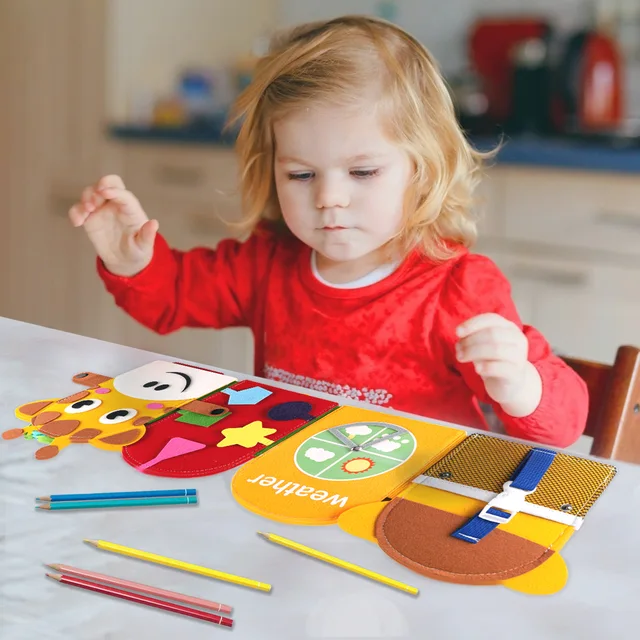
2. Busy Books (Quiet Activity Books)
Great for focus, tactile exploration, and visual stimulation.
Benefits:
- Hand-eye coordination
- Problem-solving
- Sustained attention
Price: $20–$50 depending on materials and complexity.
3. Nesting Eggs and Shape Sorters
Simple but powerful. Kids experiment, get frustrated, try again, and learn.
Benefits:
- Fine motor skills
- Coordination
- Understanding same/different concepts
Price: $10–$25
4. Magnetic Logarithmic Boards
Not just about numbers—magnets, colors, and textures turn it into a full sensory experience.
Benefits:
- Early math concepts
- Visual and tactile development
- Symbolic play
Price: $15–$35
Developmental Psychology + Toys: What’s the Best Toy for Each Stage?
Developmental psychology breaks childhood into stages—and each stage benefits from specific toys:
- 0–12 months: toys with texture, gentle sounds, and color contrast
- 1–3 years: stacking toys, shape sorters, activity panels
- 3–5 years: role-playing sets, building blocks, musical toys
- 5+ years: strategy games, science kits, art supplies
The best toy isn’t the most expensive or high-tech—it’s the one that lets your child create their own experience.
Final Advice from a Passionate Mom
- Don’t overstimulate. Less is more. A few well-chosen toys and lots of unstructured time is best.
- Let them be bored. That’s where creativity is born.
- Play with them—but don’t control the game. Be a partner, not a director.
- Observe. Free play gives you incredible insight into your child’s emotional world.
Conclusion: Don’t Underestimate the Power of Free Play
Kids don’t need the most expensive or “smart” toy on the market. They need space, time, and tools that spark curiosity. Free play—supported by the right toys—nurtures the growing brain like few other things can.
And you, as a parent or educator, have the power to offer that world of possibilities. No neuroscience degree required. Just observation, trust, and thoughtful toy choices.
It’s not an expense—it’s an investment in their future.